19 Aug, 2026

Try This: The Purpose-Meaning-Action Data Framework

By |2026-08-19T12:44:37-04:00August 19th, 2026|Categories: Research & Evaluation|Tags: , , , , , |0 Comments

Two staff members review printed data together, with the text “Try This: The Purpose-Meaning-Action Data Framework” displayed over the image.
Try this exercise with your staff and let me know if it’s useful for you.

On the road to becoming data-driven, collecting useful data starts with understanding why you need it.

Some data helps organizations demonstrate accountability to funders, boards, leadership, participants, and other stakeholders. Other data supports learning by helping staff understand what’s working, where challenges are emerging, and how programs might improve.

Often, the same data can contribute to both purposes. The important part is determine the role the data is playing.

Understanding the purpose of a metric is a first step. Programs staff may need to consider what the information actually means and what conclusions it can reasonably support. Attendance may tell you how many people showed up yet offers limited information about what participants learned or experienced. Likewise, collecting meaningful information has limited value if no one uses it to make decisions.

The Purpose-Meaning-Action Data Framework brings these considerations together so your team can examine whether the data you’re collecting is helping you understand and strengthen your work.

Try this exercise with your staff and let me know if it’s useful for you.

Objective:

This exercise is designed to help teams examine the purpose, meaning, and potential action behind the data they routinely collect.

This Activity Is For:

  • Nonprofit program, evaluation, communications, development, and leadership staff who collect, review, or use organizational data
  • Philanthropy staff who develop reporting requirements, review grantee data, or work directly with funded organizations
  • Data and evaluation staff who want to engage colleagues in conversations about how information supports learning and decision-making

What You’ll Need:

Plan for approximately 50 to 60 minutes for this exercise. If your organization collects a significant amount of data, focus on one program, reporting process, survey, dashboard, or other manageable set of measures rather than trying to review everything at once.

For an in-person session, you’ll need:

  • A current report, survey, data dashboard, tracking form, or list of metrics your team regularly collects
  • Sticky notes
  • Pens or markers
  • Three sheets of flip-chart paper labeled PurposeMeaning, and Action
  • A timer

For a virtual session, you’ll need:

  • A digital copy of the data collection tool or report you’re reviewing
  • A shared virtual whiteboard, spreadsheet, or collaborative document
  • Three sections labeled PurposeMeaning, and Action
  • A timer

Before the session begins, select approximately three to five data points for the group to review. Choosing a smaller number allows the team to examine each one closely instead of rushing through a long list.

(more…)
12 Aug, 2026

When the Numbers Don’t Tell the Whole Story

By |2026-08-19T11:29:48-04:00August 12th, 2026|Categories: Research & Evaluation|Tags: , , , , |0 Comments

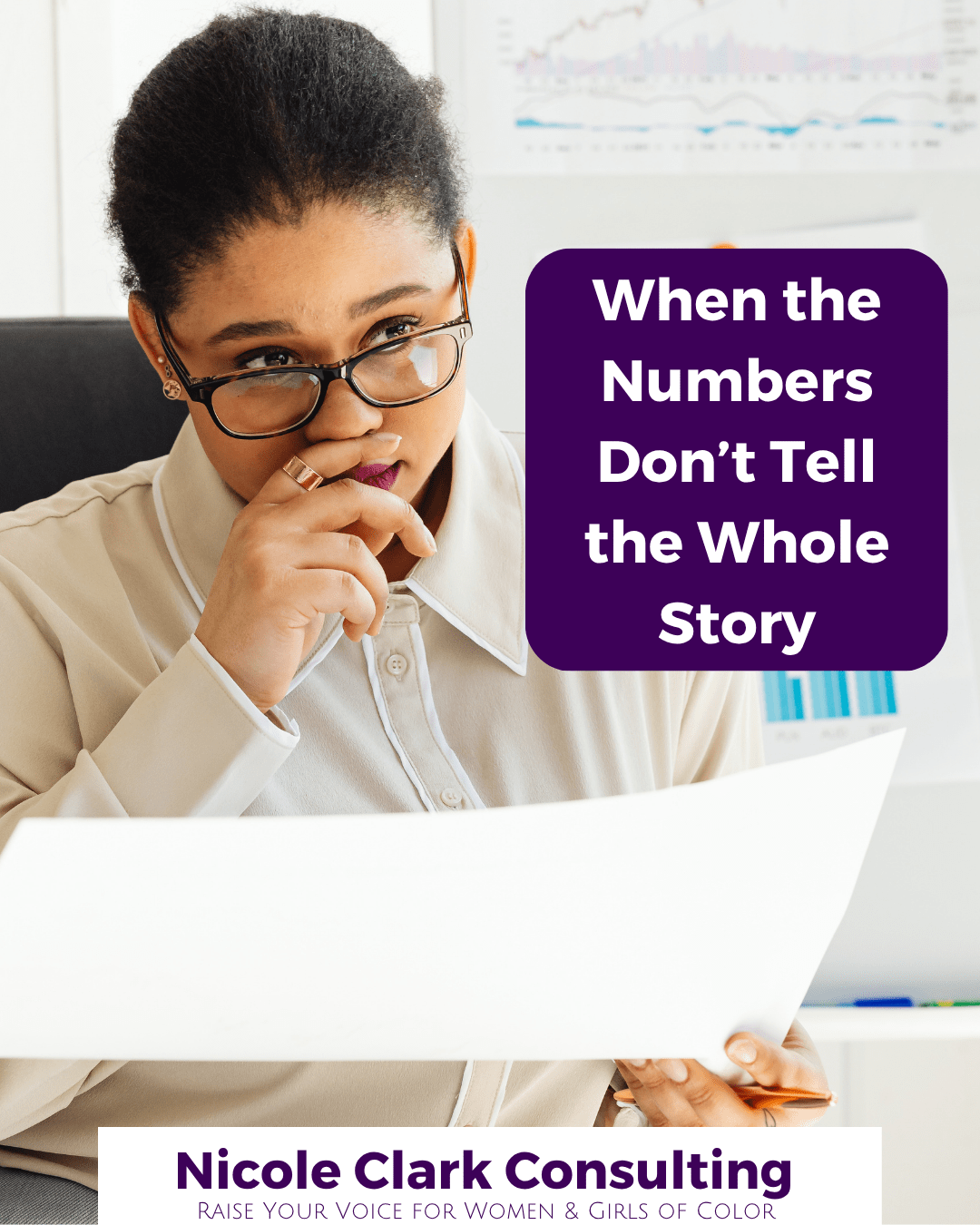
A woman wearing glasses reviews a document in front of a laptop, with charts in the background and the text “When the Numbers Don't Tell the Whole Story” displayed beside her.
Your numbers can tell you what happened, but do they tell you whether your program is making a difference?

Collecting data with a clear purpose is an important first step. Once you know why you’re collecting it, you can now ask: What does this data actually tell us? 

Nonprofits collect plenty of information about their work. Staff track participants served, events held, trainings delivered, community members reached, referrals made, resources distributed, and countless other activities. These numbers can provide useful information about what a program is doing and whether it’s reaching the people it intended to reach. However, problems arise when we expect those numbers to tell us something they can’t. A measure of activity isn’t automatically a measure of impact.

(more…)
6 Aug, 2026

Ask Nicole: Data for Learning vs. Accountability

By |2026-08-19T11:30:00-04:00August 6th, 2026|Categories: Research & Evaluation|Tags: , , , , , |0 Comments

Have a question you’d like to be featured? Let me know.

In 2017, I facilitated a focus group for participants involved in a leadership project. As part of the project, some participants received funding to implement small scaled engagement events in their local communities. One participant hosted an event to engage community members, and while the host anticipated over 100 attendees, the actual number was a quarter of that.

Based on the attendee numbers, the host shared that she didn’t think her event had been very successful because “not many people” attended.

At first glance, that conclusion made sense. We’re socialized to believe that attendance is the most visible measure of success. Fewer attendees could easily feel like a missed opportunity.

But as the conversation continued, a different story emerged.

The participants who attended remained engaged throughout the event. They asked thoughtful questions, contributed to meaningful discussions, and continued interacting after the session ended. What initially looked like a disappointing turnout became evidence of something much more valuable: The event still fostered genuine engagement.

That experience has stayed with me for years because it illustrates an important lesson about data: The numbers we collect don’t always tell the whole story.

(more…)
20 May, 2026

Try This: What Is Our Funder Value-Add?

By |2026-05-20T13:50:23-04:00May 20th, 2026|Categories: Strategic Planning & Sustainability|Tags: , , , |0 Comments

Three women collaborate around a table, reviewing information on a laptop during a strategy discussion. A Black woman stands and points to the screen while two colleagues seated at the table look on. The image includes the text “Try This: What Is Our Funder Value-Add?” on a gold background with Nicole Clark Consulting branding.
Try this activity with your team and let me know what you discover about your funder value-add.

In my last two posts, I explored why funders should evaluate their portfolios and how to identify structure barriers that prevent grantees from seeking funding. A strong portfolio reflects the role a funder plays in helping grantee organizations succeed.

This raises an important question for program officers:

Why would a strong organization want to be part of our portfolio?

The answer may seem obvious: Funding.

But the strongest funder-grantee relationships shape strategy, absorb risk, convene partners, influence the field, and create the conditions for learning and adaptation.

This month’s Try This activity is designed to help program officers clarify what their organization contributes beyond the check.

Objective:

To help program officers and senior program officers articulate the unique value their foundation brings to grantees and the broader ecosystem.

This activity is ideal for:

  • Program officers
  • Philanthropy staff responsible for funding portfolio strategy
  • Evaluation and learning staff

What you’ll need:

  • 90 minutes of uninterrupted time
  • Copies of your funding strategy, theory of change, or strategic plan
  • Recent grantee feedback (if available)
  • Sticky notes or a shared virtual whiteboard
  • Flip chart paper or a document for capturing reflections
  • Markers for sticky notes and flip chart paper

The steps:

(more…)
13 May, 2026

How Funders Can Identify Structural Funding Barriers

By |2026-05-13T14:56:07-04:00May 13th, 2026|Categories: Strategic Planning & Sustainability|Tags: , , , , |0 Comments

Illustration of a Black woman using a wheelchair while working at a computer, with the text “How Funders Can Identify Structural Funding Barriers ” and Nicole Clark Consulting branding.

When program officers evaluate their funding portfolios, it’s natural to focus on grantee performance: Did organizations meet their goals? What outcomes did they achieve? Which approaches showed the most promise?

These are important questions, yet they tell only part of the story.

Sometimes the biggest barriers to impact have nothing to do with grantee organizations. Instead, the biggest barriers may be embedded in the structures surrounding the funding itself.

From application requirements and reporting expectations to payment terms and assumptions about what “capacity” should look like, If funders want to build stronger investment portfolios, they should identify not only how grantees perform, but how funding practices shape who can access resources and succeed.

(more…)

This Is A Custom Widget

This Sliding Bar can be switched on or off in theme options, and can take any widget you throw at it or even fill it with your custom HTML Code. Its perfect for grabbing the attention of your viewers. Choose between 1, 2, 3 or 4 columns, set the background color, widget divider color, activate transparency, a top border or fully disable it on desktop and mobile.
Go to Top