
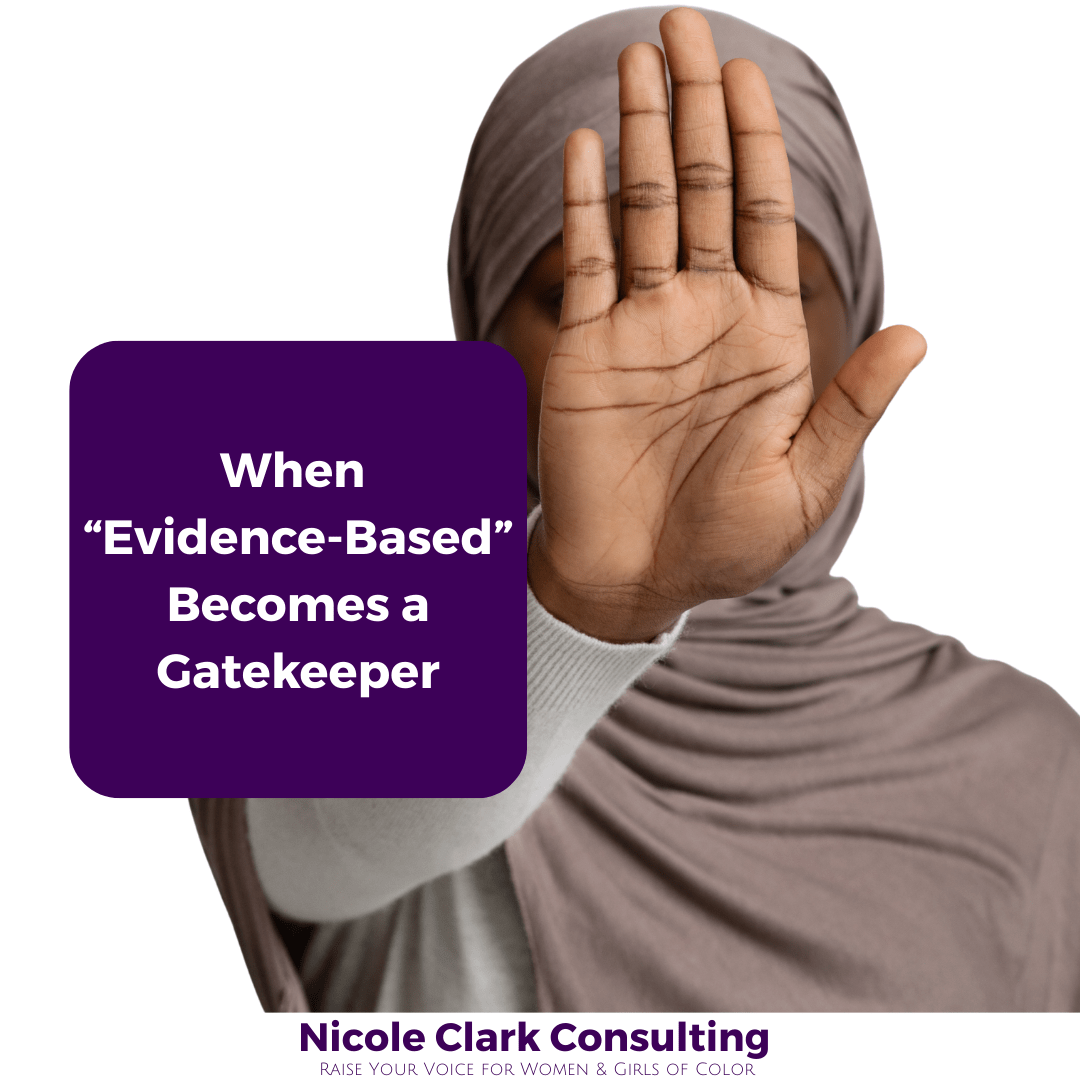
In the nonprofit sector, “evidence-based” is treated as a marker of credibility, signaling rigor, effectiveness, and responsibility (especially in conversations about funding, accountability, and impact).
In theory, this makes sense. Evidence should help ensure that programs and services do what they claim to do. In practice, I’ve seen institutions define and enforce evidence-based standards in ways that quietly shape access to resources, trust, and organizational legitimacy.
Over time, I’ve come to see how evidence-based can function as a gatekeeper that shapes participation in ways that aren’t always intentional, transparent, or equitable.
When Standards Decide Who Gets Through the Door
Evidence-based frameworks often rely on formal research, published studies, and standardized models. These standards can feel neutral, but they tend to privilege organizations with access to research infrastructure, funding, and time. Smaller nonprofits, community-rooted organizations, and groups led by people closest to the issues often operate without those advantages despite delivering meaningful, effective work. When evidence requirements are narrow, they determine who gets a seat at the table.
Lived Experience Doesn’t Always Count as Evidence
One of the most common tensions I’ve observed is the gap between lived experience and what institutions recognize as evidence. Institutions often treat community feedback, practitioner insight, and local data as supplemental rather than foundational. Even so, organizations rooted in their communities may struggle to meet external evidence standards despite years of practical knowledge. The result is a hierarchy of knowledge that elevates certain forms of proof while sidelining others.
The Pressure to Conform Shapes Programs
When funders closely link funding to evidence-based language, nonprofits often feel pressure to reshape their programs, services, and even logic models. In some cases, this leads organizations to retrofit their work around predefined models rather than designing from community need outward. Over time, this pressure can narrow innovation, discourage adaptation, and create distance between what organizations know their communities need and what they feel permitted to propose.
Gatekeeping Isn’t Always Intentional—but It Has Consequences
Most funders and institutions don’t set out to exclude organizations. Still, when evidence-based criteria go unquestioned, they can reinforce existing inequities in the sector. Organizations that already have visibility, scale, and research backing move more easily through funding processes, while others spend significant time trying to translate their work into acceptable evidence language. Even when well-intentioned, this dynamic shapes whose work grows, whose voices carry weight, and which approaches institutions replicate.
Key Takeaway
Recognizing when evidence-based becomes a gatekeeper means asking harder questions about how people define evidence, whose knowledge they center, and which kinds of work they reward. Using evidence as a doorway rather than a wall can strengthen the nonprofit sector without narrowing who gets to lead and innovate.
Raise Your Voice: How has being “evidence-based” created barriers for your work, and how did you navigate it? Share below in the comments section.
Was this useful? Subscribe to the Raise Your Voice newsletter, and explore my consulting services.
